THE UX OF FINAL MAJOR PROJECT | BLOG 08
Second Prototype & Usability Testing
14/07/21 – 25/11/21 (about 3 months - excluding summer holidays)


 Design Brief: Materialise the obscurity and complexity of the Blockchain System.
Project Member: Yiwei(David) Han, Sue Heeyeon An.

Design Phase
Integration with The Stack Theory
We checked the book the stack recommended by our tutor in the last feedback and found that the conceptual structure of technology is similar and corresponding to the blockchain hierarchy we wanted to show. I also found that the order of the layers in our first generation model was a bit off (in terms of the blockchain workflow, the encryption process in the data layer should happen at the beginning, not at the end.) So we tweaked the order of our layers based on the regular order of a transaction process.

The stack reading notes and research (Courtesy of Sue).

Adjusted blockchain structure corresponding to The Stack Theory (Courtesy of David).
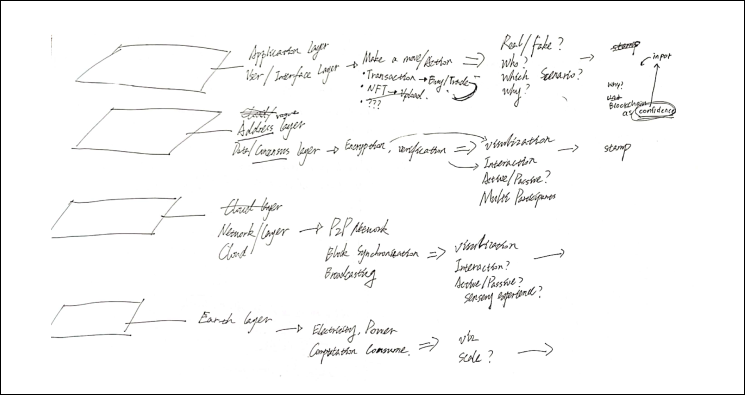
Sketches for discussion on the order of layers and decisions (Courtesy of David).

Final Order of the Layers that we determined (Courtesy of David).
Ideation - Upgrad the Metaphor For Each Layer
Alaistair suggested that we think about how to get people to interact among it instead of with it. This was fascinating but also meant that a larger size was needed. In discussion with Sue, I thought we could brainstorm separately for each layer, and that the size of each layer didn't have to be the same, but should be considered based on specific needs. In terms of how to design the experience for each layer, I suggested that there could be two types of experience, active and passive, depending on the need. The following is a summary of what we brainstormed for each layer:


Brainstorming on how to design the experience at each level through metaphor (Made by Group).
1. Application layer:
- coin toss;
- buttons;
- sliders;
- combinations of above;
- tossing different shaped items.
2. Data layer/Encryption layer:
- taking a picture of what was cast on the previous layer overlaying the code;
- stamping what was cast on the previous layer;
- packing a box for what was cast on the previous layer;
- turning into an animated projection of the code.
3. Consensus layer:
- many eyes reviewing an animation of the result of the encryption in the previous layer;
- participants playing a game of find the difference, clicking pass if all are the same and vice versa;
- printing out the code generated in the previous layer and having participants use it to compare with the code shown in the previous layer.
4. Network layer:
- after the previous layer has been passed by the participants: one balloon in the balloon network matrix is inflated to become bigger and slowly the surrounding balloons start to become bigger;
- one light in the light bulb matrix lights up and then the surrounding lights slowly light up;
- the printer matrix starts to print new information in parallel;
- one of the burgers in a row adds a new layer of meat and the other burgers start to add a new layer of meat as well.
After much discussion and evaluation, we selected what we thought was the most appropriate idea for each layer at the time (the bolded ideas are the ones we finally chose). However, due to time constraints, I only implemented the technical requirements for the network layer and we were prepared to present the ideas for the other layers to the tutors using simple materials and manual presentations.
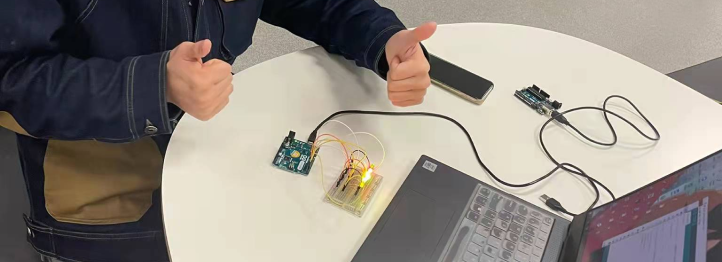
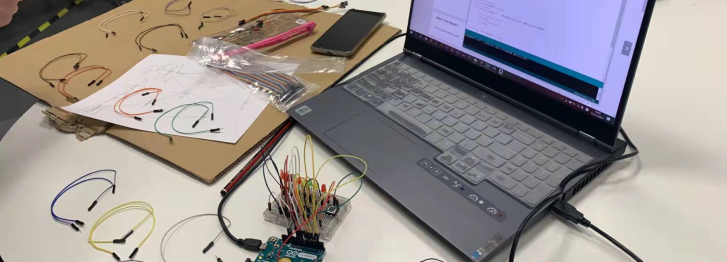
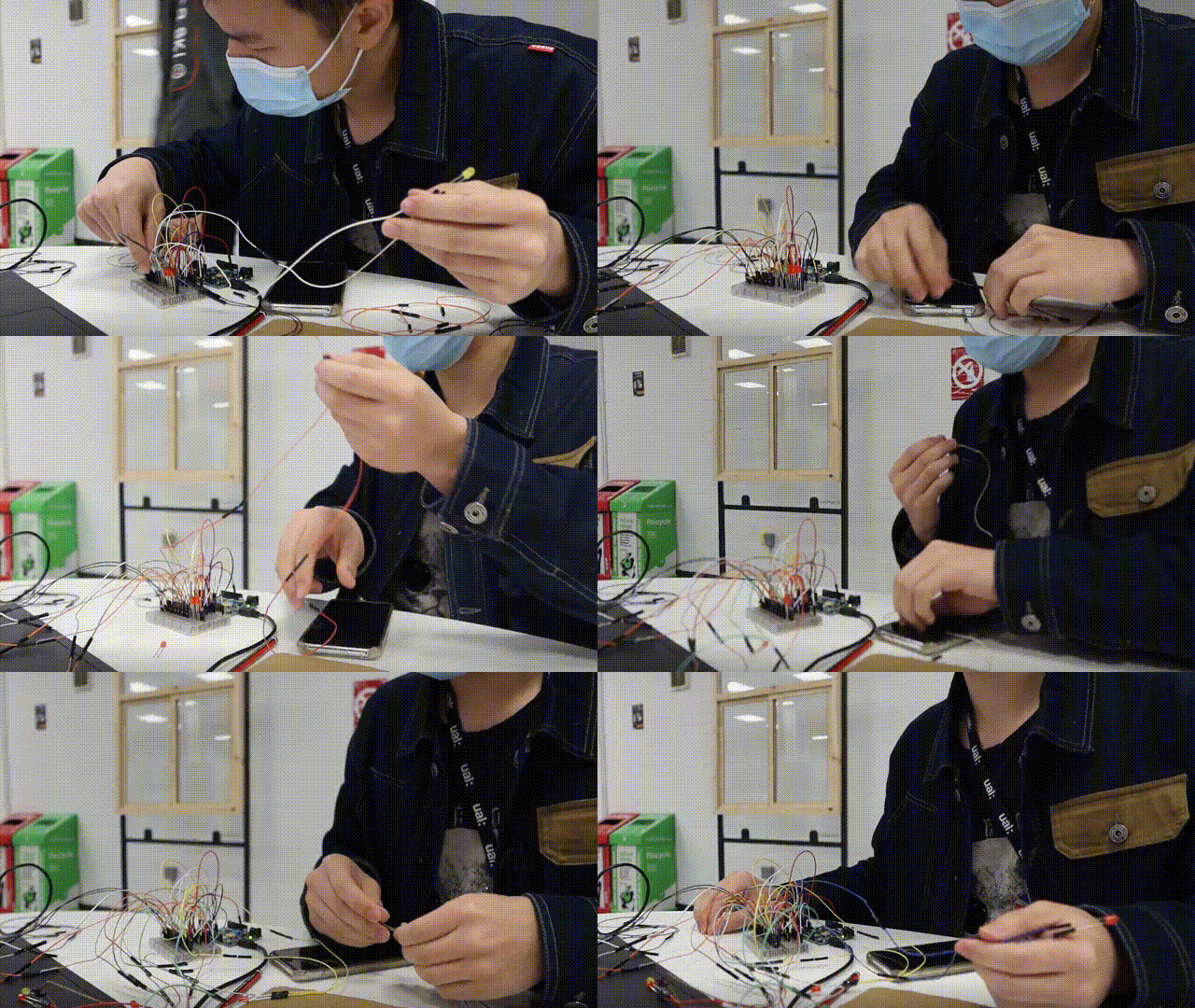
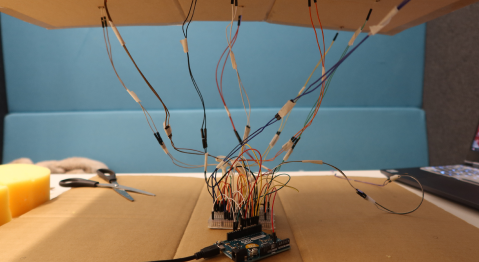
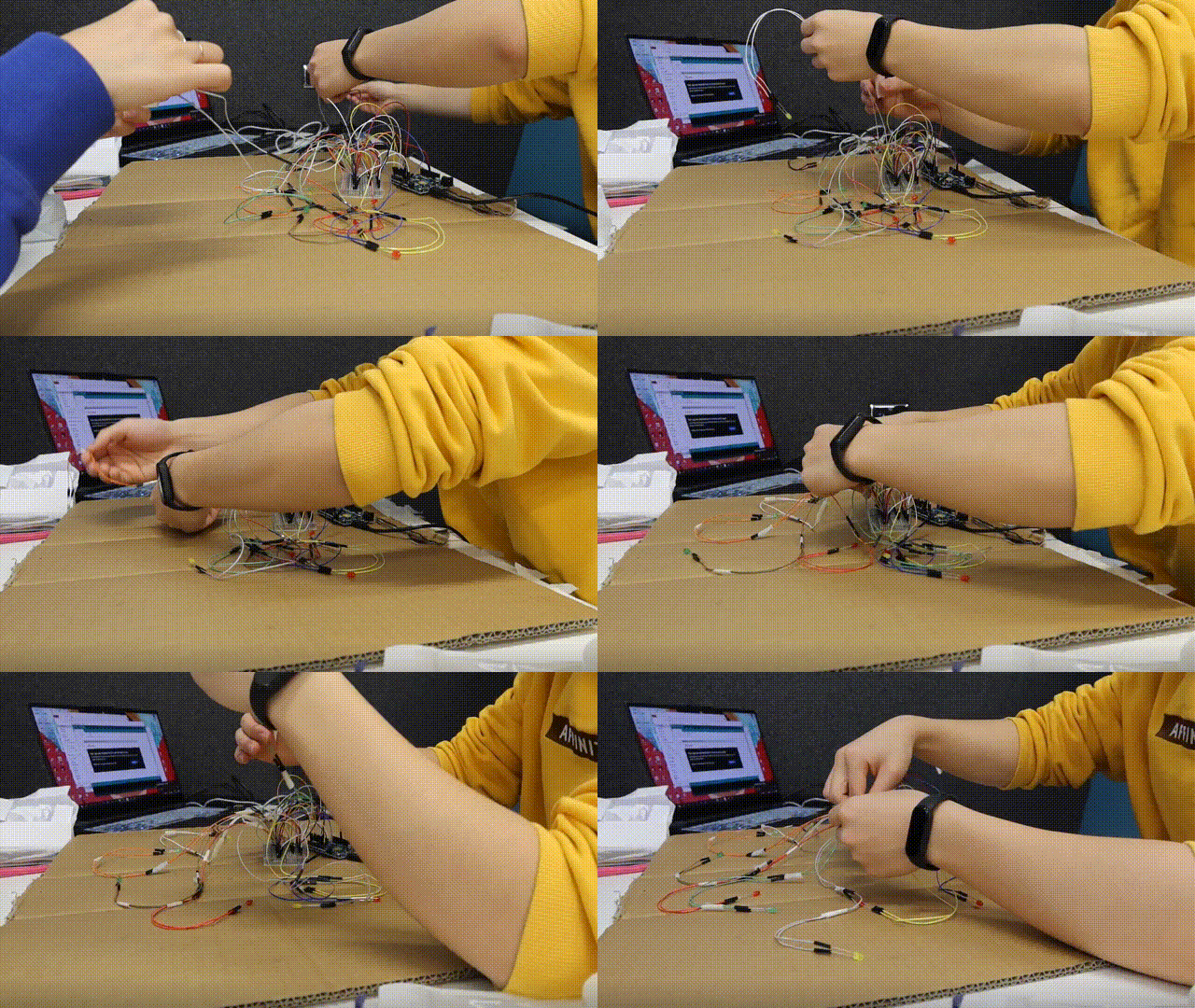
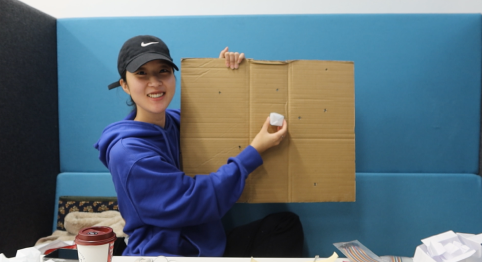
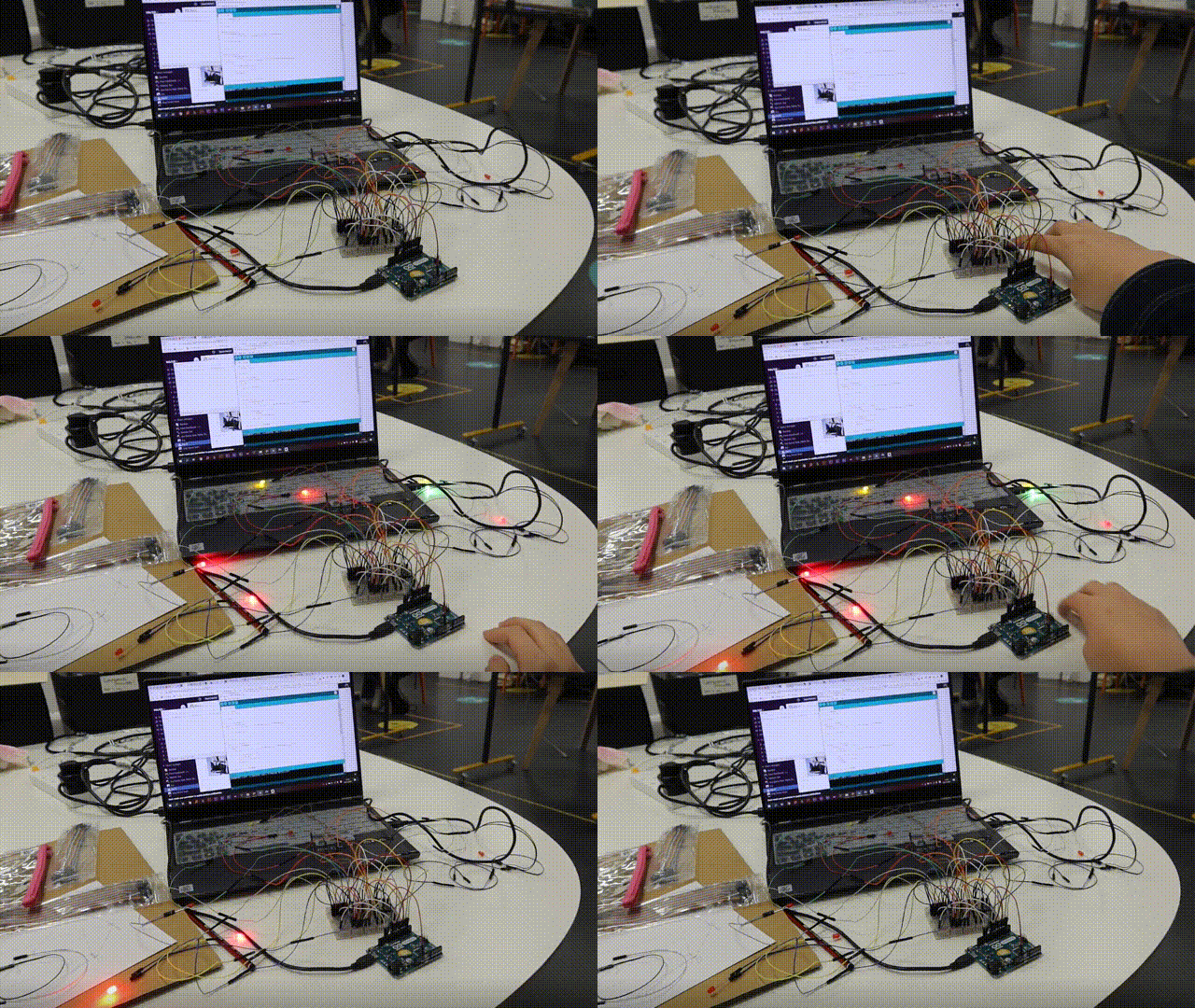
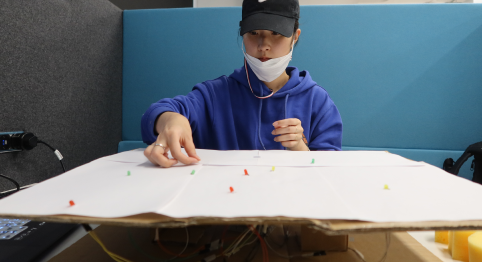
Process of Creating Upgraded Network Layer (Courtesy of David).
Second Prototype & Test Feedback
The second prototype demonstration video (Courtesy of David).
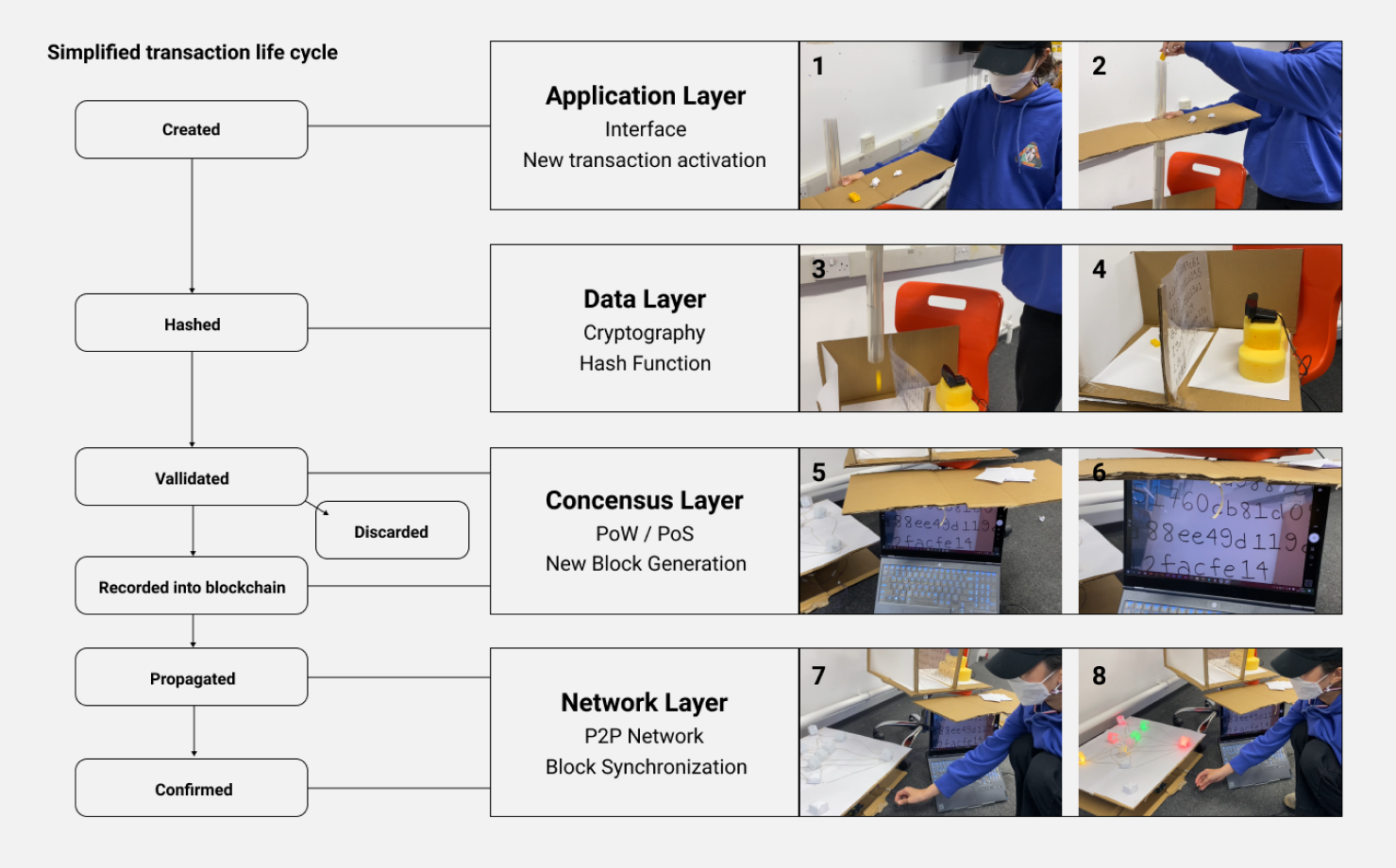
The second prototype experience flow: Blockchain four-layer experience process corresponding to the transfer process of cryptocurrencies (Courtesy of David).
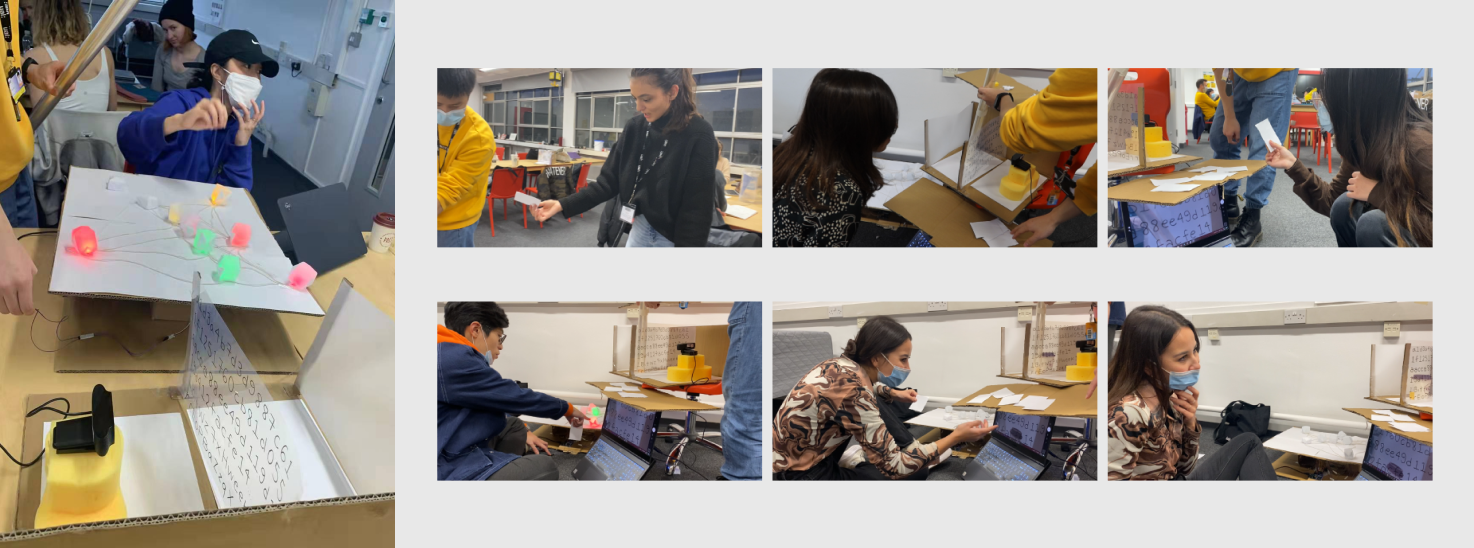
Tutorial & User Testing (Courtesy of Sue).
We presented this iteration to our mentors and received a lot of feedback to help us refine it, for example, on the application layer, why the "cast" action as a metaphor? Regarding the consensus layer, should more than one person need to verify it together? Is there a need to give participants a demonstration or hint that a new block has been created successfully? And so on.
We also tested this with our potential target audience and documented their feedback of the experience as a whole or of each layer. Next week we will be working on improving our presentation and experience for each layer based on the experience pain points raised by our potential audience and our newly learned knowledge of the blockchain structure.


Notes and takeaways from the Beijing University Blockchain Open Course: I learnt about the fundamental features and structure of blockchains and the cryptographic structure of the Merkel Tree - this provided a theoretical basis for our later design optimisation. (Courtesy of David).
Reference
Bratton, B.H. (2016). The Stack : on Software and Sovereignty. Cambridge, Massachusetts: The Mit Press.
Xiao Zhen (2018). Open Course on “Blockchain Technology and Applications” by Xiao Zhen, Peking University. [online] www.bilibili.com. Available at: https://www.bilibili.com/video/BV1Vt411X7JF?p=4 [Accessed 8 Nov. 2021].